





4 ways AI can help tackle overtourism in travel destinations
Artificial Intelligence
30 April 2025
Overtourism has become one of the most pressing issues facing the tourism sector today. According to Google, searches for this term have tripled since January 2024.
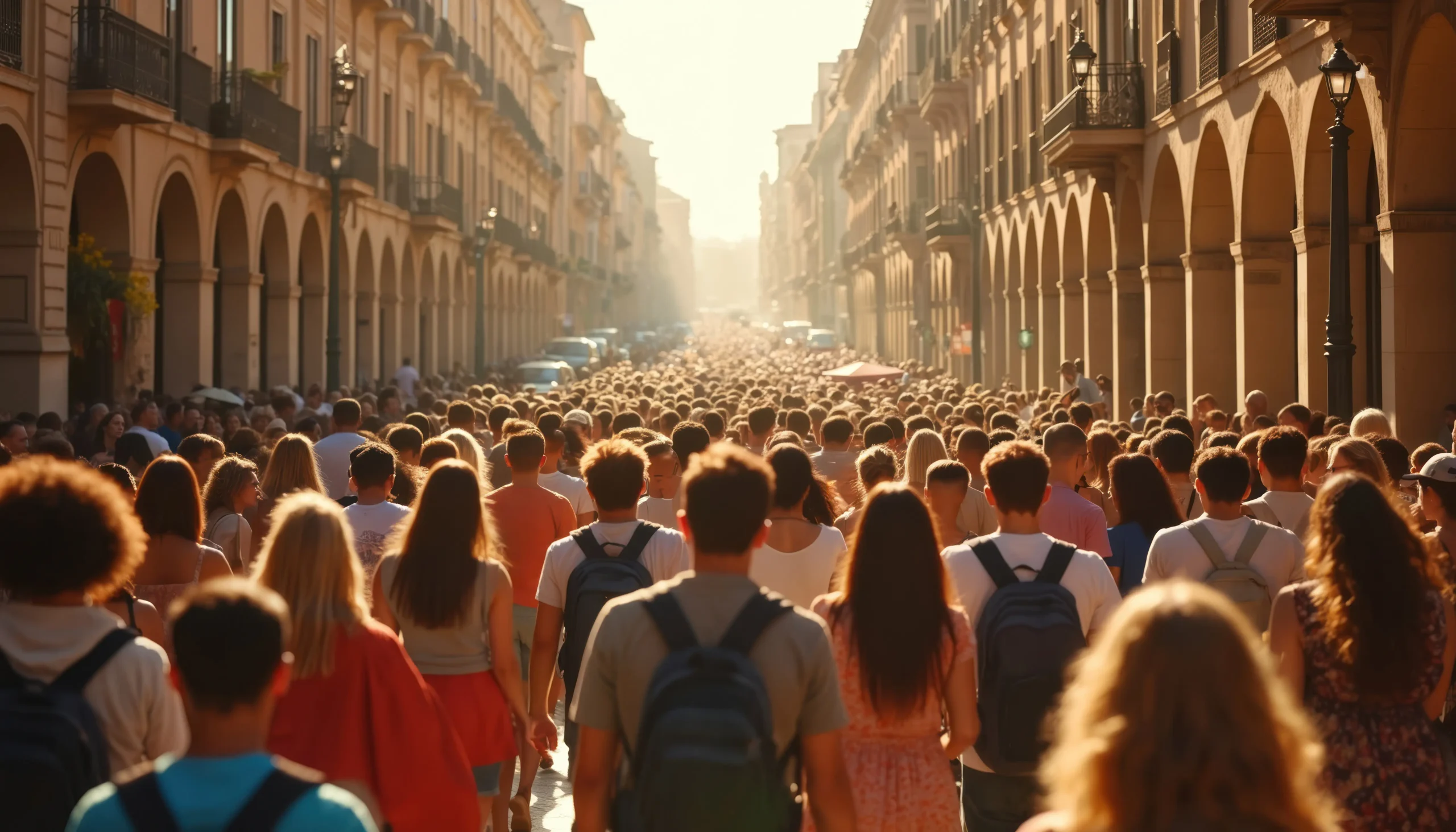
From the Balearic and Canary Islands to Prague, Kyoto, Venice and Florence, an overwhelming influx of visitors has pushed many destinations to their limits, sparking tension and discontent among local residents.
Finding fast, effective solutions is now essential to ensure that tourism growth aligns with the wellbeing and quality of life of local communities.
As new technologies continue to evolve, both public and private organisations are increasingly exploring how artificial intelligence (AI) can support the management and mitigation of this complex issue.
In this article, we’ll take a closer look at how overtourism has developed, how AI can play a role in countering it, and how the Almawave Group is already helping destinations to shift towards a more sustainable and balanced model.
The post-pandemic tourism boom and the rise of overtourism
In recent years, overtourism has reached worrying proportions — particularly in the aftermath of the COVID-19 pandemic.
During the lockdowns, with borders closed and travel grinding to a halt, tourism came to a near standstill. But from 2022 onwards, as restrictions were gradually lifted, the world experienced a surge in travel unlike anything seen before.
This phenomenon, often referred to as “revenge travel”, saw millions of people eager to make up for lost time. As a result, tourism not only recovered rapidly, but in many places exceeded pre-pandemic levels in less than two years.
According to UN Travel, by 2024 international tourism had already bounced back to 99% of pre-pandemic figures — amounting to 1.4 billion international travellers, an 11% increase compared to 2023. In the Middle East alone, international arrivals in 2024 were up 32% compared to 2019.
The growing desire to explore new places, fuelled by viral travel content on platforms like Instagram and TikTok, has placed enormous pressure on a number of destinations — leading to a series of negative side effects, especially for the environment and local communities:
- severe overcrowding in city centres, resulting in noise and long queues
- environmental degradation, littering, and damage to natural areas
- rising costs of goods and services for locals, paired with the spread of chain stores and tourist-focused venues that dilute local character
- a sharp rise in short-term rentals, lowering residents’ quality of life and making it harder for locals, workers and students to find housing
- increased disturbance to public peace and daily life
Moreover, as the UNWTO points out, overtourism affects not only residents’ perceived quality of life, but also the quality of the visitor experience. In other words, it’s a phenomenon that negatively impacts everyone — both tourists and locals.
Among the destinations most affected are Venice, Barcelona, many Spanish resorts, the Canary Islands, Dubrovnik, Amsterdam, and several cities across Japan.

Overtourism: a matter of sustainability
Overtourism isn’t an isolated issue — it’s closely linked to the broader challenge of sustainability.
A sustainable destination is one that successfully balances tourism growth and management with respect for the local environment, society, and economy. In other words, it’s a place that offers visitors an enriching and authentic experience while ensuring that tourism remains a positive force for local residents.
It’s no surprise, then, that preventing the negative effects of overtourism has become a top priority for many destinations around the world.
In recent years, local communities have increasingly taken to the streets, urging authorities to impose limits or stricter regulations on tourist flows.
In July 2024, thousands of residents marched against overtourism in Barcelona, citing rising living costs and the strain on public services. That same month, around 10,000 people gathered in Palma de Mallorca to demand tighter control over mass tourism, concerned about the soaring cost of living and the erosion of local cultural identity. Protests also broke out across Gran Canaria, Tenerife and Lanzarote.
In Italy, demonstrations have been held in Rome, Florence, Bologna, Milan and Naples — and even in Rovaniemi, Santa Claus’s hometown, locals have voiced their frustration.
Governments have not turned a blind eye. Across the globe, various solutions are being trialled to cope with the pressure of excessive tourism:
- Venice is testing a paid entry system and imposing new rules on short-term rentals.
- Barcelona has banned new short-term lets, halted the construction of new hotels, and introduced restrictions on cruise ships.
- Florence has regulated short-term rentals in the historic centre and banned the use of keyboxes.
- Copenhagen has launched a major awareness campaign encouraging sustainable tourist behaviour, rewarding visitors for making environmentally friendly choices.

Artificial intelligence: a powerful ally against overtourism
Since its emergence, artificial intelligence (AI) has proven to be a powerful tool in the fight against overtourism.
Its strength lies in its ability to support advanced predictive analytics, real-time monitoring and the personalisation of travel experiences.
AI-powered big data analysis enables Destination Management Organisations (DMOs) to monitor tourist movements in real time and forecast peaks in visitor numbers.
Thanks to its versatility, AI can be adapted to even the most complex strategies, and is already being successfully integrated into various tools designed to support targeted, data-driven action.
Let’s explore four key ways AI is helping to counter overtourism:
- Advanced analysis of tourism data
AI can process vast amounts of data from multiple sources and formats — such as flight and hotel bookings, social media, events, and traveller behaviour — in just a matter of seconds. These insights can be used to make forecasts that allow authorities, DMOs and local businesses to identify high-pressure periods and design strategies to better distribute visitor flows.
For example, promoting lesser-known but equally appealing areas can help relieve pressure on iconic sites, improving the experience for both tourists and residents. Similarly, encouraging events during traditionally quieter months supports seasonality management and extends the benefits of tourism year-round.
- Monitoring online reviews
Collecting and interpreting the huge volume of online feedback left by tourists and residents is vital to understanding how a destination is truly perceived — from hospitality and safety to accessibility and overall visitor satisfaction.
AI can gather, analyse and standardise ratings while offering real-time insights into overall sentiment, along with more detailed KPIs.
Large-scale semantic analysis also helps pinpoint areas that need urgent attention and highlights strengths where the destination may outperform its competitors.
- Personalising the visitor experience
AI-powered chatbots and virtual assistants can deliver tailored advice to tourists, suggesting less crowded routes and promoting more sustainable experiences.
These tools can offer recommendations based on individual preferences, country of origin, or visitor type, helping to distribute flows more evenly and ease the pressure on key attractions during peak periods.
- Custom predictive models to anticipate travel trends
While DMOs have traditionally relied on historical data to anticipate tourism flows, AI allows for the creation of custom predictive models that incorporate real-time climate data, economic trends, and digital traveller behaviours.
This makes it possible to stay ahead of emerging trends and plan investments or marketing activities accordingly. AI can also be used to generate alternative scenarios and adjust strategies based on the most likely outcomes.
These applications of AI are not just theoretical — they’re already in motion.
VisitScotland, for instance, is piloting a new approach to explore how AI can be harnessed to rebalance visitor flows and raise the profile of lesser-known destinations.
By collecting data on bookings, hotel occupancy and online reviews, AI will help identify hotspots at any time of year. This will enable the destination to suggest alternative locations to tour operators and promote them through targeted campaigns on social media.

AI for tourism: practical solutions by Almawave
Tourism is one of the many sectors actively supported by Almawave’s intelligent solutions. From platforms to chatbots and other AI-powered tools, the company helps public and private organisations harness the power of new technologies to address overtourism in a tangible, measurable way.
1 – D / AI Destinations: a predictive platform for managing tourism flows
D / AI Destinations is the AI-driven platform for destination marketing and management developed by The Data Appeal Company, part of the Almawave Group.
It enables DMOs and tourism businesses to monitor all aspects of a destination in real time — from its reputation and visitor origins to traveller preferences, accommodation, f&b, attractions and transport. It also covers flight trends, hotel bookings, tourist spending, and local events.
AI processes and analyses all this data to deliver actionable insights and recommendations that support sustainable growth.
With this platform, destinations can:
- Monitor tourist peaks to manage pressure and notify relevant stakeholders.
- Identify alternative areas to promote, relieving pressure on overcrowded hotspots.
- Support tourism operators in planning events or activities during low seasons to reduce seasonality.
- Define visitor profiles to run targeted marketing campaigns and refine destination positioning.
- Pinpoint strengths and weaknesses, offering practical guidance on where to act.
The combination of data analysis and AI ensures that decision-makers always have a clear, real-time picture — enabling smarter, more informed choices.
Seville, in Spain, is already using D / AI Destinations to reduce overtourism in its historic centre.
Thanks to real-time data, the city can now identify areas that are not yet part of mainstream tourist circuits but have strong potential due to their characteristics and positive visitor feedback.
AI chatbots and virtual assistants to personalise the visitor experience
Almawave’s Virtual Assistant for Tourism provides direct support to visitors, enhancing their experience while helping destinations manage flows more efficiently.
Fully integrable with a destination’s telephone and online platforms, the assistant allows for 24/7 multichannel interactions in multiple languages. Using a combination of traditional and generative AI, it understands and responds to natural language queries, offering a seamless and dynamic dialogue:
- It answers real-time questions about tourist information, opening hours, transport and recommended routes.
- It suggests personalised alternative experiences, helping ease the pressure on popular areas.
- It offers multilingual support to improve accessibility and inclusivity.
- It promotes sustainable itineraries aligned with more responsible forms of tourism.
Digital Monitoring: real-time perception tracking
One of the most innovative tools for managing tourism sustainably is Digital Monitoring — an advanced AI-powered system that collects and analyses huge volumes of data from online reviews, comments and opinions about a destination.
This allows destinations to:
- Analyse sentiment among tourists and residents to understand evolving perceptions.
- Identify issues related to overcrowding, urban decay or poor hospitality.
- Take proactive corrective action to improve visitor experiences in real time.
- Compare the destination’s reputation with that of competitors to spot areas for improvement.
AIW4SmartCity – Decision Support System (DSS)
Among Almawave’s many solutions for public administrations, the AIW4SmartCity Decision Support System is also highly effective in detecting and addressing overtourism.
This interactive platform aggregates and visualises all city data — from public safety and green space perception to the concentration and movement of tourists in specific areas.
Using smart indexes, cartographic mapping and machine learning models, the DSS creates a digital twin of the urban territory. This allows city planners to monitor key assets and simulate future scenarios based on current conditions.
It’s an essential tool for gaining a real-time overview of the city and making timely, informed decisions that enhance the quality of life for both residents and visitors.
Want to explore Almawave’s tourism solutions up close?
Visit the website to find out more.