





Tech on the table: AI’s role in the agri-food sector
Artificial Intelligence
3 July 2025
AI has been a hot topic at many discussion tables, and now it’s making its way to the table we gather around to eat. From farm fields to grocery aisles and kitchen counters, AI is quietly reshaping the agri-food sector—how food is grown, transported, marketed, and even consumed.
It’s also tackling issues that have long been topics of discussion and action all around the globe like safer food and less waste, helping industries move from reactive fixes to proactive solutions.
And we’re just at the start. McKinsey & Company estimates that generative AI could add the equivalent of $2.6 trillion to $4.4 trillion annually across 63 use cases, increasing the impact of all artificial intelligence by 15 to 40 percent.
Through AI, the food sector is hitting new highs in efficiency, sustainability, and quality. From farm to fork, improved demand forecasting, smarter distribution, and real-time supply chain monitoring are helping businesses make quicker, sharper decisions—creating a system that benefits both people and the planet.
Food industry challenges have been around for as long as humans have eaten. So, what makes AI truly different from other technologies? What advantages does it bring, and how is it being applied both within the industry and for consumers?
In this blog, we’ll cover:
- What makes AI different from previous technologies in the food industry
- How AI adds value across the food chain
- The key advantages AI brings to the table
- Use cases for businesses within the food sector
- How AI benefits the end consumer.
What makes AI different from previous technologies in the agri-food industry
So, what sets AI apart from previous technologies in the food industry? And why does it matter?
Unlike traditional technologies that mainly automate tasks or improve efficiency incrementally, AI brings a fundamentally different approach: it learns, adapts, and makes decisions based on vast amounts of data.
This allows it to predict, optimize, and personalize in ways we couldn’t achieve before. That’s why AI has already transformed sectors like healthcare, public administration, and agriculture, delivering tangible economic benefits.
And now, it’s the food industry’s turn—an industry where roughly one-third of all food produced globally, about 1.3 billion tons, is lost or wasted every year (FAO).
This stark figure reveals the unique complexity of the food sector, where mismatches in distribution and supply chain inefficiencies create challenges unlike those faced by many other industries.
Fortunately, predictive AI enables more accurate demand forecasting, smarter product distribution choices, and real-time supply chain monitoring. These capabilities empower faster, better-informed decisions that help companies stay competitive.
But AI’s impact goes beyond speed and accuracy. It makes processes smarter by integrating data from sensors and other sources into intuitive systems.
From the end user’s perspective, complex information becomes easy to access and act on through familiar interfaces—such as messaging apps—that deliver clear, actionable insights instantly.
In short, AI is transforming the food industry from a reactive, fragmented system into a proactive, connected, and intelligent ecosystem—benefiting businesses, consumers, and the planet alike.
How AI adds value across the food chain
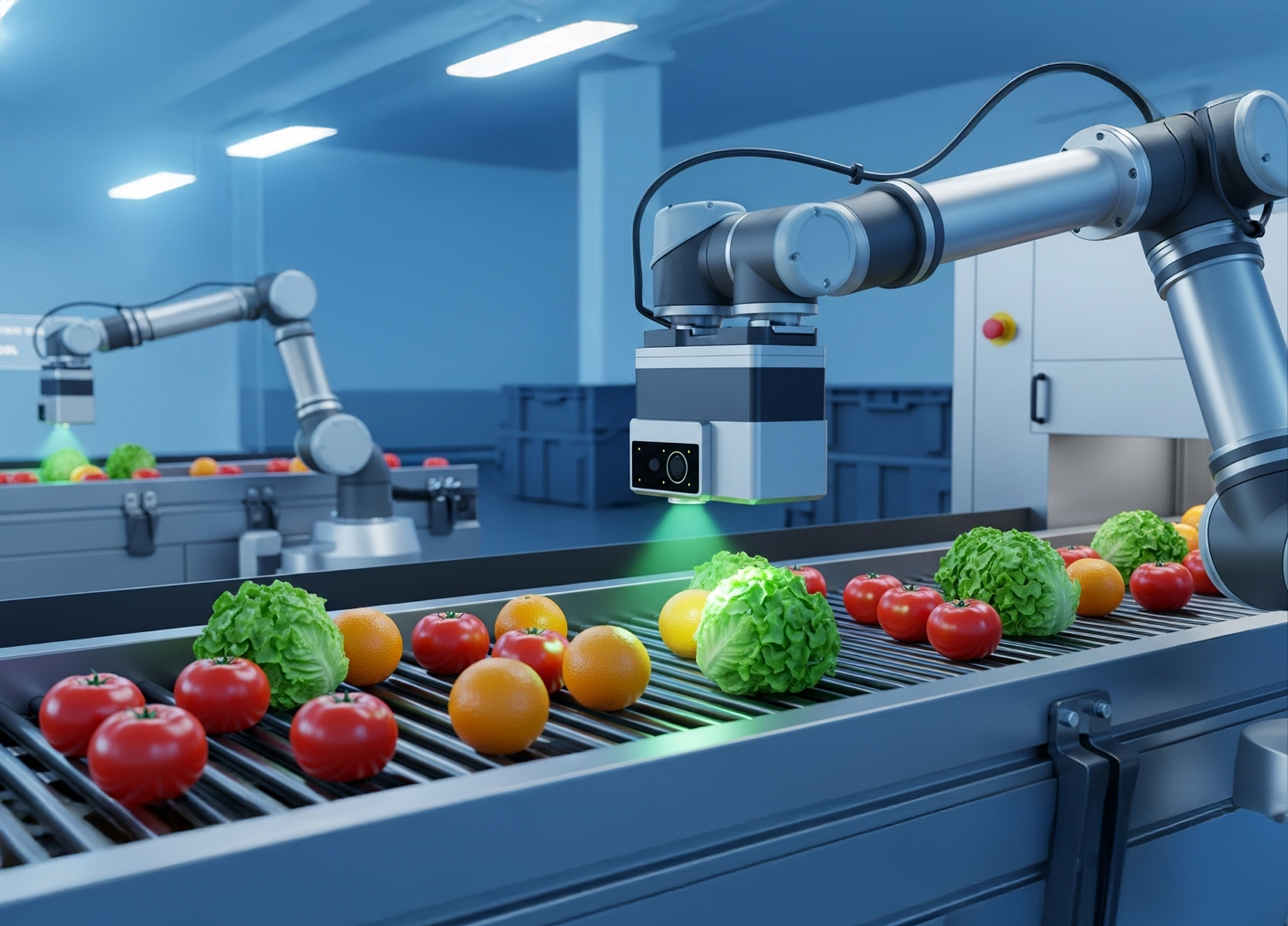
- From field to fork: AI applications cover the entire journey, supporting everything from crop management and supply chain logistics to personalized marketing and consumption choices.
- Data-driven decision-making: By harnessing data, AI reduces guesswork, enabling faster, more accurate, and proactive decisions.
- Transparency and efficiency: AI enhances visibility across the supply chain, helping to streamline operations and reduce waste.
- Personalization: It allows for customized experiences, from diet recommendations to targeted marketing, making the food system more responsive to individual preferences and needs.
The key advantages AI brings to the table
The following advantages highlight only a portion of AI’s transformative potential. As the technology matures and adoption broadens, we can expect further benefits to emerge, shaped by ongoing discoveries and novel applications.
- Greater sustainability and waste reduction
AI helps tackle one of the food industry’s most persistent problems: waste. With more accurate demand forecasting, producers and retailers can avoid overproduction and better align supply with actual consumer needs. This doesn’t just reduce costs — it lowers the environmental impact of discarded food, which currently accounts for nearly 10% of global greenhouse gas emissions (UNEP).
- Improved food safety and traceability
By combining AI with technologies like IoT sensors and blockchain, businesses can monitor temperature, hygiene, and handling conditions across the entire supply chain. The result: a safer, more traceable food system that can detect anomalies early, ensure compliance, and strengthen consumer trust.
- Operational efficiency and productivity
From automating back-office documentation to optimizing production workflows, AI streamlines operations across departments. It helps teams save time, reduce errors, and shift focus to higher-value tasks — whether in logistics, procurement, or quality control.
- Personalized user experiences and healthier lifestyles
AI also plays a role in shaping how we consume food. Smart applications can suggest tailored diets, offer digital coaching, or even gamify healthy eating habits. These tools respond to real behaviors and preferences, helping consumers make better-informed, more conscious choices.
- Competitive differentiation in a global market
In an increasingly crowded and commoditised food market, AI allows businesses to stand out. It enables hyper-segmentation, multilingual content creation, and faster go-to-market strategies — allowing brands to connect with the right audiences, in the right way, at the right time.
Use cases for businesses within the food sector
Building on the advantages AI brings to the food industry, the question then becomes: what do these benefits look like in practice? To illustrate AI’s real-world impact, here are some concrete examples of how businesses across the food sector are putting these technologies to work—improving operations, reducing waste, and driving innovation.
- Dynamic shelf-life management and smart expiry tracking
AI systems can now monitor temperature logs, transport delays, and storage conditions to predict actual shelf life — not just what’s printed on the label. This helps businesses adjust pricing, distribution, and even promotional activity in real time to prevent avoidable waste.
- Hybrid AI and blockchain systems for supplier authentication
Instead of simply “tracing” food, AI can now cross-check supplier records, logistics chains, and quality certificates in a blockchain-secured environment. This helps procurement teams spot inconsistencies and select partners based on verified performance — not just contracts.
- Inventory rebalancing with real-time local demand signals
AI can integrate footfall data, weather forecasts, and point-of-sale trends to redistribute inventory across outlets. This reduces overstock in slow-moving stores and prevents missed sales elsewhere — ideal for perishable goods and seasonal demand.
- Predictive maintenance and energy optimization in factories
By learning from machinery usage, power consumption, and error logs, AI enables food production sites to anticipate malfunctions before they occur — while also identifying energy savings in refrigeration, cleaning cycles, and packaging lines.
- Document intelligence for regulatory compliance and audits
Instead of manually preparing HACCP reports or traceability logs, AI tools can compile data across production stages and generate compliance-ready documents in a fraction of the time, reducing audit risk and freeing up operational staff.
Use cases for the end consumer
AI doesn’t just improve operations behind the scenes—it also enhances how people experience, understand, and engage with food in their daily lives. From making healthier choices to discovering new products, here’s how consumers are already benefiting:
- Smart applications for personalized diets and conscious choices
AI-powered apps can analyze individual health goals, preferences, and restrictions to recommend tailored diets and recipes. They also help users make more ethical and sustainable choices, aligning eating habits with personal values and environmental concerns.
- Visual recognition for nutritional tracking
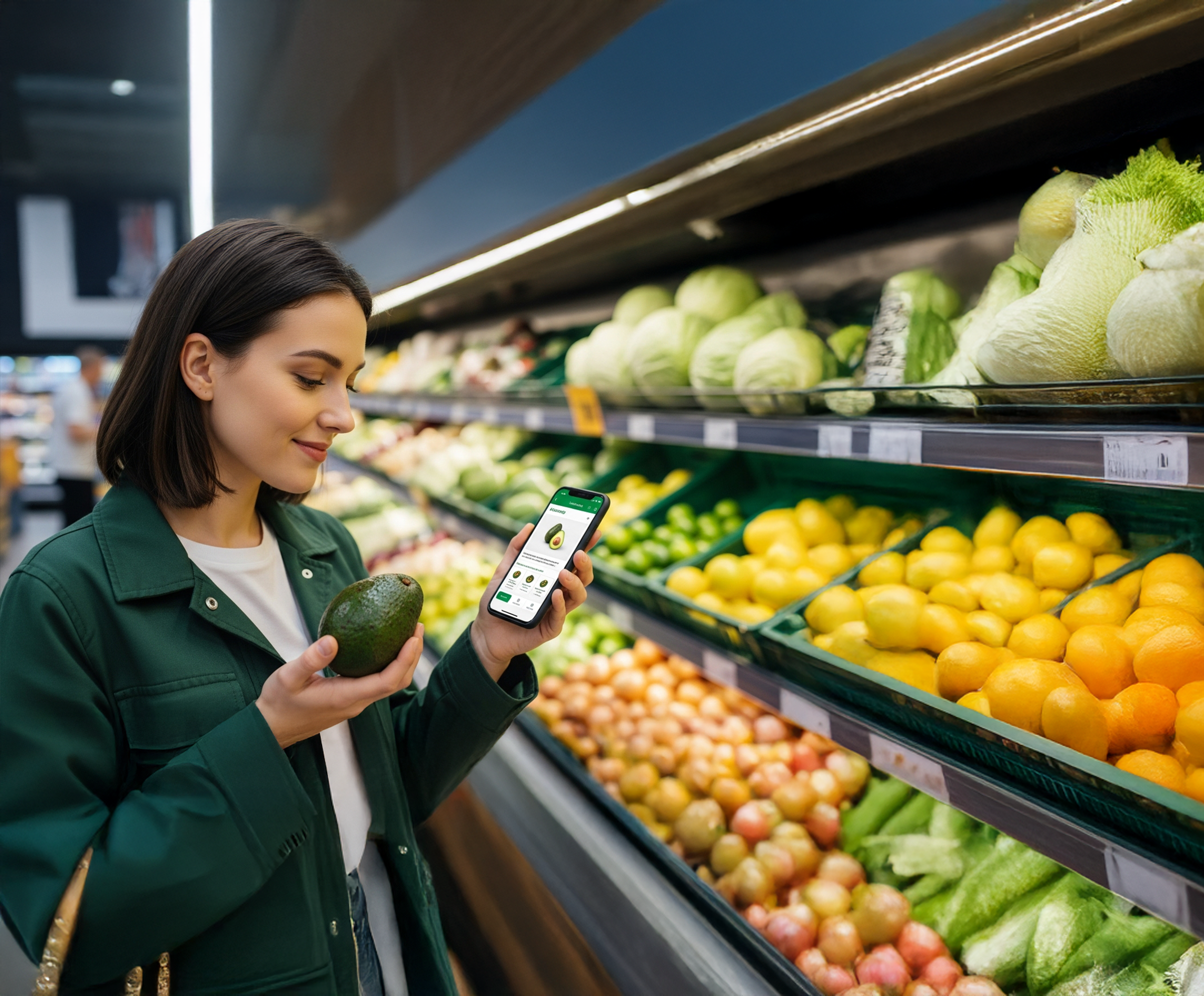
Thanks to image recognition, consumers can simply snap a photo of a meal to get instant insights into its nutritional content. This makes calorie tracking effortless and helps build greater awareness of what we eat—no need to scan barcodes or manually log ingredients.
- Multilingual content creation to promote food products globally
AI tools can automatically generate and adapt product content across different languages and cultural contexts. This allows producers to tell their story, highlight product benefits, and engage international audiences—whether they’re small local brands or global food groups.
- Virtual assistants for food education and sustainable shopping
Conversational AI is making it easier to get real-time answers about ingredients, allergens, certifications, or sustainability scores. These digital assistants guide consumers with personalized recommendations and educational prompts, supporting more informed, responsible purchases.
The future of AI in food
AI is proving to be a powerful ally in transforming the agri-food sector. As Valeria Sandei, CEO of Almawave, said at the trade fair organized by Fiere di Parma Spa in collaboration with Fiera Milano SpA and Koelnmesse:
“Artificial intelligence can also help make the agri-food sector more efficient, ensuring sustainability, transparency and concreteness, making experiences increasingly personalized, improving logistics and providing companies with more and more tools to better understand markets.”
She went on to emphasize:
“The integration of artificial intelligence in the agri-food supply chain represents a strategic opportunity to enhance the excellence of agri-food and face global challenges. These technologies allow us to optimize and enhance the entire production cycle, from cultivation to distribution, from product protection, to the improvement of logistics, to safety, to the back office, up to the reduction of waste, improving sustainability, efficiency and competitiveness.”
AI’s growing role means the food sector is better equipped than ever to meet today’s demands and tomorrow’s challenges, fostering a more sustainable, transparent, and efficient food system for businesses and consumers alike.
Explore how AI is transforming your industry.
Learn more → Link