




AI and inclusivity: Building an accessible future for all
Over the past few years, artificial intelligence has mostly been seen as a way to speed up scientific progress.

Artificial Intelligence
26 November 2024
But that’s just part of the story. When used responsibly and ethically, AI has the potential to drive real change in making things more equal, accessible, and inclusive for everyone.
In his essay “Machines of Loving Grace” Antrophic CEO Dario Amodei, now one of the brightest minds in the field of artificial intelligence, wondered what the AI-driven world of the future might look like: “But with strong efforts on our part, we may be able to get things moving in the right direction—and fast. If we do, we can make at least a downpayment on the promises of dignity and equality that we owe to every human being on earth.”
Promoting the use of technology to protect and assist vulnerable individuals – from people with disabilities to the elderly – is a moral duty for institutions and businesses, reflecting the commitment to a world where equal opportunities and quality of life are at the heart of society.
Practical examples: how AI can support people with disabilities or from disadvantaged backgrounds
AI truly represents a powerful tool for cultural transformation, working towards a more equitable future.
But how can this be turned into real action?
There are countless ways AI can be used in this area. The following are just a few examples:
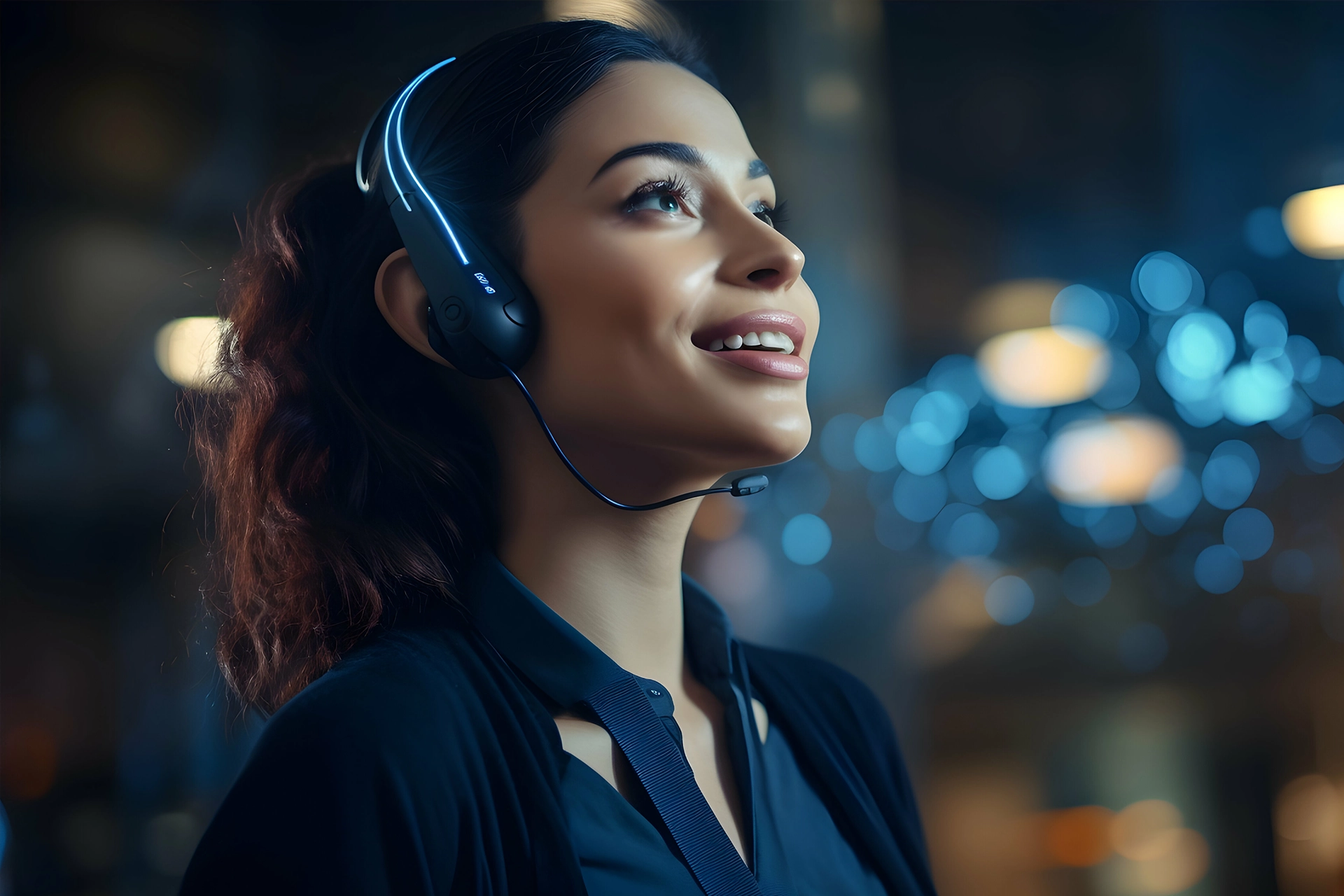
- Assisting people with physical disabilities: AI is transforming assistive devices. For instance, voice commands can replace the need for a keyboard and mouse, creating new opportunities for accessing digital technologies.
- Language translation and interpretation: AI-enhanced translation, subtitling and interpretation services enable people to overcome language barriers and foster communication between people of different cultures and languages.
- Inclusion in education: Artificial intelligence can customize learning to accommodate the individual needs of each person. For example, people with dyslexia or other specific learning requirements can benefit from educational content designed for them.
- Support for the elderly: People with reduced motor skills or age-related neurological conditions can also benefit from AI-based solutions. Intelligent systems can help the elderly maintain greater independence by offering assistive devices that monitor health or remind them to take their medications. Some AI-powered devices can even detect potential risks and send alerts to family members or emergency services.
The UN Convention on the Rights of Persons with Disabilities defines accessibility as a human right and promotes what is known as ‘universal design.’ This approach aims to create technological solutions that respond natively to the diverse needs, abilities and preferences of all users, regardless of their physical or mental characteristics.
According to Onica Makwakwa, executive director of the Global Digital Inclusion Partnership (GDIP), inclusion and participation are prerequisites for creating artificial intelligence systems.
While this is the future we all hope for, driven by the incredible technological advancements promised by artificial intelligence, it’s not guaranteed that these benefits will be equally distributed among everyone.
Gender inequality in access to technology, such as the lack of STEM education for girls, can limit women’s opportunities to participate in and benefit from AI innovation. Promoting technological inclusion is crucial to ensuring equal opportunities in the sector.
Therefore, it is essential for businesses and institutions to oversee the proper use of these technologies and ensure the most equitable distribution of their benefits.
UNESCO (the United Nations Educational, Scientific and Cultural Organization) is at the forefront of promoting accessibility and inclusivity in AI and digital technologies for all, through its Information for All Programme (IFAP).
This aligns perfectly with the principles and ideals behind the AI Act and the UN Advisory Body, which aim to regulate and strengthen global AI governance while respecting people and the planet.

How to avoid bias in data and models
To create truly inclusive artificial intelligence, we must address a challenge that, alongside hallucinations, is likely to be one of the most complex issues for our future: avoiding bias—prejudices that can influence both models and data.
AI should never make distinctions based on gender, ethnicity, age, or any other personal characteristic. However, the risk of perpetuating human biases remains a constant concern.
If AI is a reflection of the data it is trained on, then we must ensure that this data represents the diversity of the real world. Too often, datasets risk offering a biased perspective or favoring certain groups at the expense of others.
AI algorithms are often trained on large volumes of historical data, which can carry over pre-existing gender biases. If the training data is biased, AI can perpetuate or even amplify these biases, leading to disparities in outcomes for men and women, such as in hiring decisions, bank loans, criminal justice, and more.
By driving change, AI can help create more inclusive and accessible products and solutions for everyone. However, this requires clear regulations, awareness, transparent processes, and strong oversight.
Innovative AI solutions by Almawave for enhancing accessibility and inclusivity
Innovations in artificial intelligence can serve as a powerful tool to break down barriers and promote a more equitable and accessible world when properly guided and managed.
Almawave, with its AI solutions, is transforming how people access information and interact with services, making them more inclusive and tailored to individual needs.
These solutions work across a wide range of areas to ensure truly universal access to information and digital services by:
- Overcoming sensory and language barriers
- Simplifying the often complex language of contracts and regulations
- Providing personalized assistance in navigating web portals
- Facilitating the education and training of students and workers
Speech & Voice: Revolutionizing communication for universal access
The Speech & Voice technologies developed by Almawave offer a wide range of applications to facilitate communication with people who are Deaf, blind, or have reading and learning disabilities.
Using state-of-the-art neural network-based Automatic Speech Recognition (ASR) lgorithms, these solutions enable a digital transformation of voice in all its aspects, including:
- Recognition of spontaneous speech, with speaker differentiation
- Understanding and translation of over 40 languages and more than 60 language models
- Real-time transcription
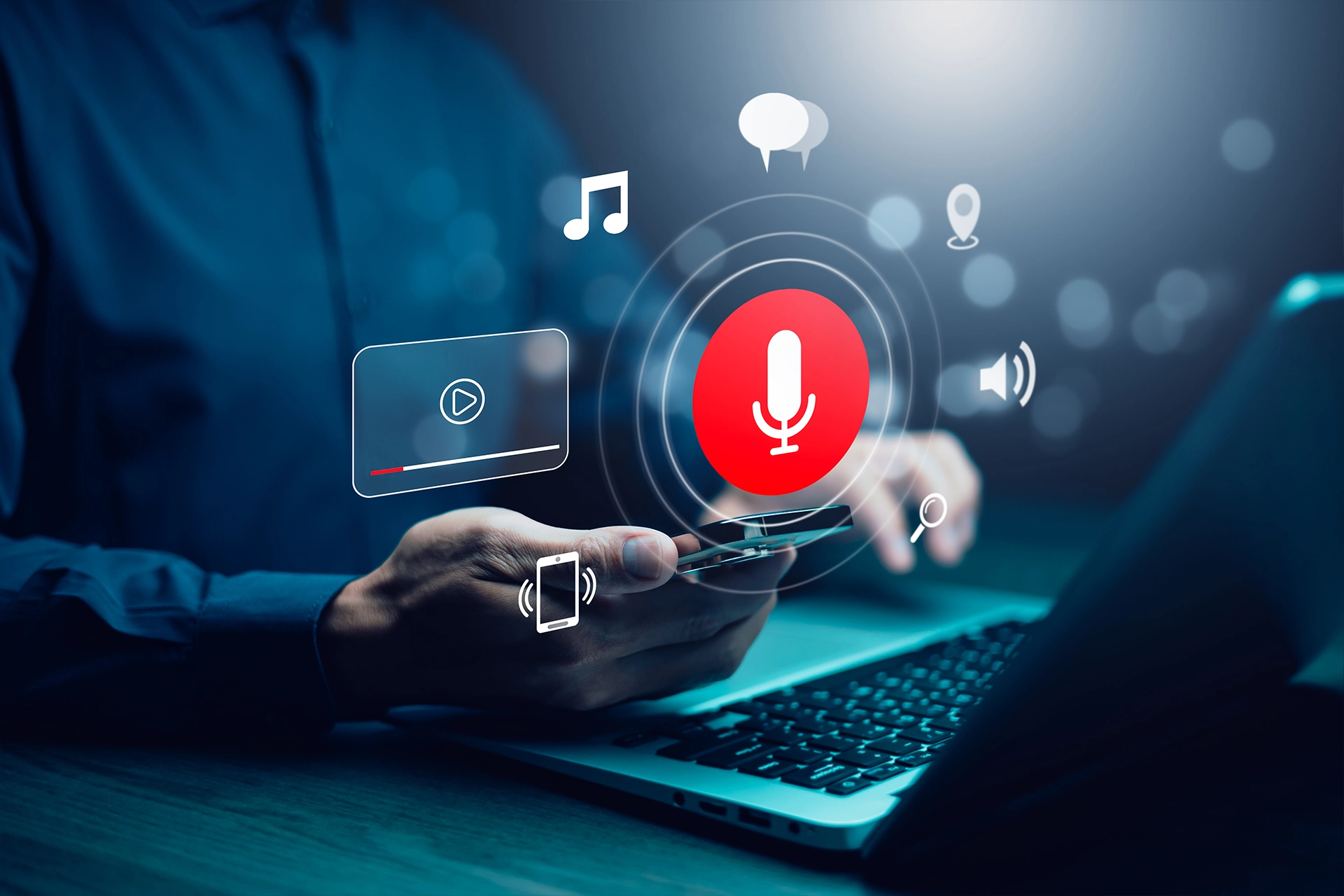
- Voice-to-text and text-to-voice conversion
This ensures the highest level of accessibility to any file or content, whether in text, audio, or video format.
Automatic subtitling with live editing support
Automatic transcription for subtitling is a typical use case to improve access to information for Deaf individuals or anyone facing difficulties accessing audio content.
This is a widespread issue both globally and nationally: according to WHO estimates, 5% of the world’s population and 12% of the Italian population are affected by hearing loss or challenges.
During live events such as corporate meetings, assembly sessions, television programs, or training events, transcription enables real-time display of text synchronized with audio.
The transcriptions are presented to the user in the form of subtitles or documents, which can be validated and refined in real time by live-editing workflow operators. This allows for the capture of every nuance of the spoken language, further increasing accuracy and ensuring a truly “accessible” service.
Subtitling can also be integrated with sign language interpretation (LIS) services for simultaneous translation of live or broadcasted events. This integration allows for universal accessibility, enabling users to access audio content through both text and/or sign language, ensuring that everyone, regardless of their hearing ability, can fully engage with the content.
Through director techniques, it is also possible to display, in a single synchronized screen, the video feed with ongoing interventions, real-time subtitles, and the LIS interpreter’s window in Picture in Picture (PIP) mode.
Thanks to the power of generative AI, the transcription not only facilitates content understanding but also enables the generation of summaries and reports, improving productivity and efficiency in processing information.
Automatic transcription for subtitling pre-recorded files offers an additional advantage in content accessibility, as it extends inclusivity to those accessing recorded content, such as training videos, conferences, or informational materials.
AI-powered transcription technology can analyze and transcribe even the most complex audio content with high accuracy, enabling the generation of subtitles that can be synchronized with video for optimal viewing.
The ability to customize and refine subtitles through semi-assisted validation tools, along with the integration of specific glossaries or corporate terminology, enhances the service’s effectiveness. This provides a tailored experience for users, making the technology versatile and useful for a wide range of applications.

Making texts and documents accessible with Generative AI and LLMs
Almawave’s Generative AI-based Large Language Models (LLMs) can generate and simplify texts of all kinds in just a few seconds.
This technology is also the foundation of virtual assistants, which are essential for providing an inclusive and accessible service across both public and private sectors.
Generative virtual assistants, regardless of an individual’s conditions or characteristics, inherently offer broader access to content. In just a few seconds, they can:
- Summarize texts
- Translate them
- Simplify content by using clearer, more accessible language for everyone
- Answer questions and provide clarification
- Read aloud the text, offering voice-based accessibility
By leveraging these capabilities, Almawave’s AI technology helps break down barriers and ensures that information is available to a wider, more diverse audience.
To enable businesses and public administrations to create intelligent chatbots quickly and easily, Almawave has developed Conversation Studio.
This application, powered by generative AI, allows users to create, test, and deploy virtual assistants without needing complex conversation design.
An especially noteworthy example of this technology is Discovery Experience, an AI app on the AIWave platform. This solution includes the Discovery Experience for Education vertical, a suite of generative AI tools designed to support both teaching and learning in corporate and educational contexts.
Discovery Experience for Education provides customized virtual assistants that, through natural language dialogue, help students prepare for exams, summarize lessons, clarify topics, and search for content.
Not only that: even teachers have tailored virtual assistants to support them in preparing lessons, exams, and grading assignments.
Each user—whether student, teacher, or administrator—has a personalized profile with specific virtual agents designed to meet their individual needs. Audio and video course materials are transcribed and indexed to make access and consultation easier.
This represents a true inclusive revolution, especially for students, as everyone can prepare according to their own characteristics, knowledge, and abilities, as well as any difficulties or disabilities, without the risk of falling behind.
Inclusivity success stories
How can companies and institutions make services more inclusive today with artificial intelligence? Here are two success stories from Almawave clients.
1 – Judicial Transcription System in Tanzania
Almawave’s Judicial Transcription System provides optimized transcription services for court sessions, ensuring efficient, secure, and reliable transcriptions while addressing the diverse needs of the courts with cutting-edge technology.
To further enhance accessibility, the transcripts are automatically translated. This feature ensures that individuals who do not speak any of the original languages can still access an accurate and faithful translation of the proceedings.
The system has been adopted by the State of Tanzania in Africa to streamline and simplify court processes, improving the experience for all parties involved, particularly in cases where individuals belong to different ethnic groups. This technology promotes fairness and inclusivity in the judicial system.

2 – AI solutions for university learning and teaching
A well-known Italian university is using Almawave’s innovative AI-based technology to support its educational and teaching processes to enhance the learning experience for both students and faculty. The technology is used to:
- Assist students in preparing for exams
- Engage in natural language dialogue with a virtual assistant on subjects and academic pathways
- Transcribe multimedia educational materials (videos, audios)
- Query the informational and educational content of courses, benefiting all stakeholders—students, teachers, and administrators
This solution helps make education more accessible, personalized, and efficient, promoting an inclusive learning environment for all users.
Artificial Intelligence is both the present and the future of technology. It can bring many benefits to communities and everyday life. It can improve healthcare and well-being, make public services more efficient, and promote safer transportation, more efficient production, and more affordable, sustainable energy. Digital technology is a tool for building a more inclusive and accessible future.
Valeria Sandei – CEO of Almawave